
Introduction to Madhubani Art
Madhubani art is also known as Mithila painting. It is a painting of Bihar and Nepal. This painting is famous for its colors, pictures and natural painting. This Madhubani art is made by women on walls, floors and also on public festivals by hand in a natural way.
Madhubani color has a deep connection with Indian heritage and legends. Its paintings often depict sacred vows representing Hindu deities, village people, animals, birds, etc. Over time, this color has become very popular in Bihar. Foreigners are delighted to see the craftsmanship and this painting attracts them.
Today Madhubani paintings are very famous all over the world for their unique beauty and eco-friendly techniques. Home decor, digital prints and global exhibitions continue to attract designers from all over the world.
History of Madhubani Painting
Madhubani art, also known as Mithila painting, originated in the Mithila region of India. The name Madhubani comes from the district where village women have practiced this art for centuries, decorating the walls and courtyards of their homes with patterns.
Madhubani art is rooted in ancient Indian traditions and Sanskrit beliefs. It reflects themes of nature, harmony, and devotion that have been a part of Indian culture for centuries. Artists used natural colors made from flowers, leaves, turmeric, rice paste, and charcoal to give the paintings their distinctive look.
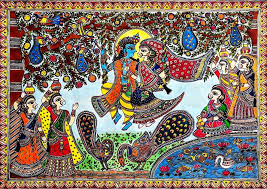
The origin of Madhubani art is linked to several stories. According to popular belief, King Janak of Mithila ordered artists to create beautiful paintings throughout the kingdom during the wedding of his daughter Sita to Lord Rama, as told in the Hindu epic Ramayana. Since then, scenes from Hindu mythology, including images of Krishna, Rama, Shiva, Durga, and other deities, have remained central themes in Madhubani paintings.
The origins of Madhubani art cards are linked to stories. King Janaka of Mithila ordered an artist to create beautiful paintings for his entire kingdom in time for the wedding of his daughter Sita to Lord Rama. Since then, Madhubani paintings have been used as decorations on walls and floors in everyone’s homes, and gradually it has become very popular.
Today, this painting has expanded beyond floors and walls. It is now also painted on clothes. People get their clothes painted and wear them. This painting has become very popular on men’s curtains, women’s sarees, suits, and everything else. After this painting is done on clothes, the price of the clothes increases, making it very pop.
Read more about our Madhubani Painting Collection.
Unique Features of Madhubani Art
Bright natural colors
Intricate patterns and detailing

Double-line borders
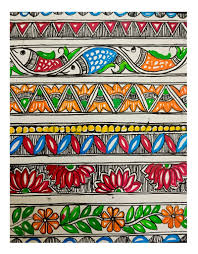
Themes inspired by nature, mythology, and festivals
Different Styles of Madhubani Painting
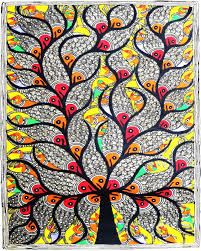
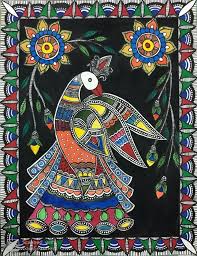
Bharni Style
Bharni—derived from the Hindi word bharna (to fill)—is one of the most prominent and vibrant styles of Madhubani art. It is primarily defined by its bold black outlines and rich, fully filled-in vibrant colors that bring mythological and religious figures
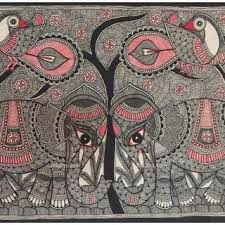
Kachni Style
It translates to “line drawing” and is characterized by fine, delicate linework that relies heavily on cross-hatching, hatching, and geometric patterns for texture rather than using solid color fills
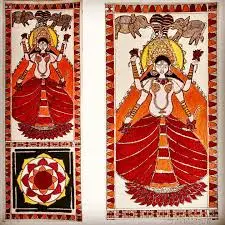
Tantrik Styl
It focuses less on narrative storytelling and more on spiritual awakening, employing precise geometry, mandalas, and mystical diagrams to represent cosmic energies .
Kohbar Style
The central motif of a Kohbar painting is a large lotus leaf with a female face at its centre, surrounded by six smaller leaves. The central pillar is seen as a symbol of the man, while the leaves represent the woman. Thus, the Kohbar is considered a visual metaphor for the strong bond between man and woman.

Common Themes in Madhubani Art
Madhubani painting has become a source of livelihood in the Mithila region. It now provides employment for many people. Painting provides employment to those who love to paint, and through this painting, they support their households. For many women, it has become their identity. Women who love painting today are able to pursue their passion and earn some money, which provides women with self-reliance.
One of the most popular themes in Madhubani art is that of Radha Krishna, which depicts the love and harmony between Radha and Krishna. These paintings depict deities like Lord Shiva, Lakshmi, Ganesha, Durga, Lord Ram, and others. It is believed that such paintings bring prosperity to the home.
Natural objects such as fish, peacocks, lotus flowers, trees, and the sun are also used in Madhubani art.
In this painting, a married woman, Rashmi, is a very important theme. Artists beautifully depict the customs and traditions of Bihar’s villages.
In addition, Madhubani also The art depicts village life which includes farming, dancing, singing and daily chores. This painting beautifully depicts the simplicity and beauty of village life.

Conclusion
Madhubani color has a deep connection with Indian heritage and legends. Its paintings often depict sacred vows representing Hindu deities, village people, animals, birds, etc. Over time, this color has become very popular in Bihar. Foreigners are delighted to see the craftsmanship and this painting attracts them.
For More Knowledge
https://en.wikipedia.org/wiki/Madhubani_art